Chore app for children: tasks without the daily reminder
The bin has been full since Tuesday and you have mentioned it three times. A chore app takes over the reminding – the chores themselves, of course, it does not.
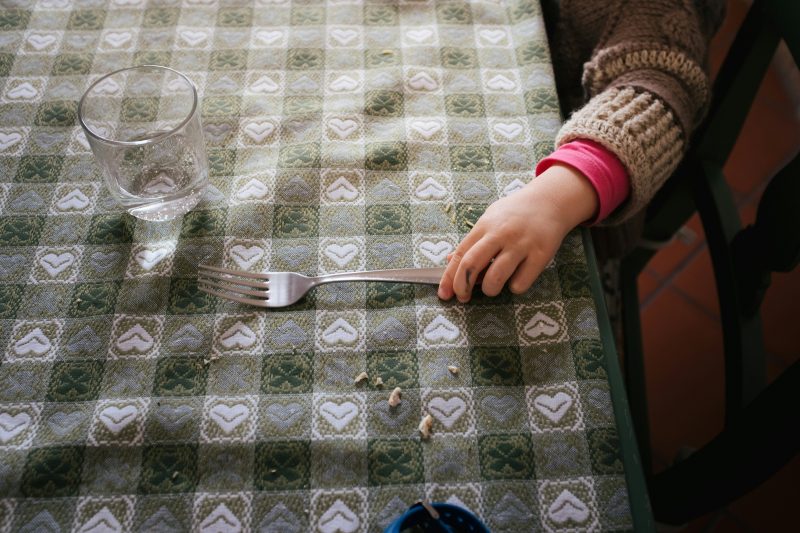
Picture a Thursday evening. The bin has been full since Tuesday, and you have said three times since then that emptying it is your son's job. The third time it did not sound friendly any more.
It is not that he is lazy. He simply does not have it in his head – and you have had it three times too often.
The short version
- A chore app for children moves the reminding from the parent to the plan. That is the real gain.
- The IFP family handbook advises starting small and adding something month by month rather than handing out everything at once.
- Under § 1619 BGB, children living in the parental household are obliged to help in a way appropriate to their strength and station in life.
- More important than a complete list is that a task genuinely belongs to one child, with everything that goes with it.
- klicksafe recommends children's apps with no advertising, no in-app purchases and no links out.
Chore app for children: what really changes
Arguments about housework are rarely about the work. They are about the fact that somebody has to do the reminding – and that this somebody is always the same person. A chore app for children changes exactly one thing: the reminder comes from the device, not from you.
That sounds small and is not. It takes you out of the role where every request sounds like nagging. And your child can look up what is due instead of being told.
What an app does not change: whether a task suits the child, whether it is described clearly, and whether anyone checks. More on that in a moment.
Which chores suit which age
The educational researcher Erika Butzmann advises in the IFP family handbook involving children in everyday tasks from around their fourth year and not pushing younger ones towards independence. The social worker Beate Weymann suggests starting small and adding something month by month.
| Age | Usually works |
|---|---|
| 4 to 5 | laying the table, putting toys away, laundry in the basket |
| 6 to 7 | packing the school bag, making the bed, feeding a pet |
| 8 to 9 | emptying the dishwasher, taking out the bin, watering plants |
| from 10 | a whole area, such as their own room or their packed lunch |
The full version with reasons is in Chores for children by age.
What the law says
Children do have to help – that is not an invention of strict parents. Section 1619 BGB states that as long as children belong to the parental household and are raised or supported by their parents, they are obliged to render services in the household in a way appropriate to their strength and their station in life.
"Appropriate to their strength" is the important limit. A five-year-old lays the table; they do not cook. And nothing in the law says that helping must be paid – whether pocket money is tied to chores is a parenting question, not a legal one. More on that in Pocket money, stars, or both.

Which features prove themselves
Repetition. What comes round daily you set up once. Everything else becomes maintenance work for the parents.
A name on the task. The American Academy of Child & Adolescent Psychiatry recommends naming chores clearly and making expectations unambiguous. "Somebody needs to do the bin" is not a task.
Taking turns between siblings. If a job rotates, the automation saves you the argument about whose week it is.
A child's view. Your child should see what is due today – not the whole family's housework plan.
Checking without controlling. Confirmation on important tasks makes sense. A notification on every single tick does not.
When a board on the fridge is enough
One child, fixed routines, always the same care: that needs no app. A magnetic board has advantages no software has – it hangs there, it never runs out of battery, and it interrupts nobody.
What speaks for an app has mostly to do with several people being involved: two households, siblings with different lists, changing care by grandparents or an after-school club, or simply an afternoon when none of you is at home.
The best solution is the one that leaves less to be said. Sometimes that is paper.
How Fleißstern shares out the chores
In Fleißstern you set up each task once: daily, on certain weekdays or every few days, morning, afternoon or evening, with a time and a reminder if you want. You can give it to one child, to every child, alternating between siblings, or on a "first come" basis – then the stars go to whoever does it first.
For tasks you want to check, the stars only count once you have confirmed them; with Premium your child can attach a photo as proof. Over 25 templates save you the typing. And when something lovely happens that was on no list, you hand out stars yourself, with a reason attached. If the whole thing needs to rest for a while – holidays, illness – you can pause a single task or all of them until a day of your choosing.
Common questions
What does a chore app for children do in everyday life?
It takes over the reminding. Instead of a parent asking three times, the plan says what is due today and the child ticks it off. Whether a task suits them and whether anyone checks remains your decision – no app solves that.
From what age should children help in the household?
Small jobs suit from around four. Erika Butzmann advises in the IFP family handbook involving children from around their fourth year and not pushing younger ones. What matters less than age is whether your child can manage the task well.
Do children have to help in the household?
Yes. Under § 1619 BGB, as long as children belong to the parental household and are raised or supported there, they are obliged to render services in the household in a way appropriate to their strength and their station in life. The extent therefore depends on age and ability.
How many chores per child make sense?
Too few rather than too many. The IFP family handbook advises starting small and adding something month by month. Two or three fixed tasks that actually happen are worth more than ten that are argued about daily.
Sources
- Familiäre Alltagsaufgaben: Kinder sinnvoll einbeziehen – IFP family handbook, Bavarian State Institute of Early Childhood Research
- Ist es sinnvoll, dass Kinder im Haushalt mithelfen? (Beate Weymann) – IFP family handbook
- Section 1619 of the German Civil Code (BGB) – services in the household and business – Federal Ministry of Justice, gesetze-im-internet.de
- Chores and Children (Facts for Families No. 125) – American Academy of Child & Adolescent Psychiatry
- Entwicklung der kindlichen Selbstständigkeit (Erika Butzmann) – IFP family handbook
- Apps sicher nutzen – klicksafe, EU initiative for safer internet use