A morning routine with children: out of the door in one piece
One shoe is missing, the lunch box is empty, and you are saying “brush your teeth” for the fourth time. Here is how mornings get quieter – with an order your child can follow themselves.
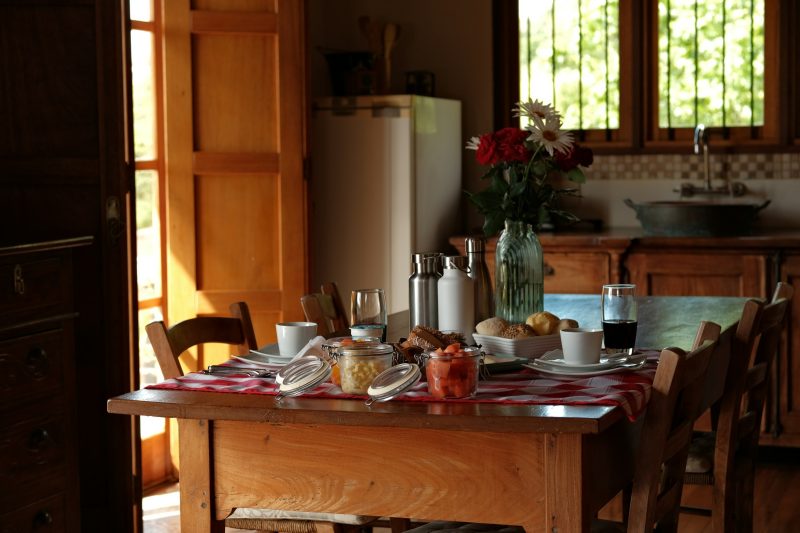
Picture it: 7:31 on a school day. The coat is still on its hook, one shoe is under the sofa, the other has vanished. And you hear yourself say “brush your teeth, please” for the fourth time, a little louder each time.
At 7:42 the front door shuts and everyone is flustered. Mornings like that say little about your child and even less about you. Often all that is missing is an order of events that works without constant prompting.
The short version
- A fixed order that stays the same every day can save a lot of arguing in the morning.
- Plenty can be done the evening before: packing the school bag, laying out clothes, setting up breakfast.
- Picture cards suit younger children; a list to tick off suits school-age children.
- Ten minutes of slack and waking up early take the time pressure out of the morning.
- The right bedtime, according to the German Federal Institute for Public Health, is the wake-up time minus the child's own sleep needs.
Why do routines help in the morning?
A routine is a fixed sequence that happens in the same order every day. If it is clear that breakfast follows getting dressed and teeth follow breakfast, nobody has to negotiate it. That saves time and nerves, particularly in the tightest hour of the day.
A review of 50 years of research found links between regular family routines and parenting competence, children's adjustment and relationship satisfaction (Fiese et al., 2002). The authors also point to methodological limits in the studies. So routines are no magic cure, but they are a good start.
What can you prepare the evening before?
- Plan for enough sleep. The right bedtime, according to the German Federal Institute for Public Health (BIÖG), is the wake-up time minus the child's own sleep needs. A child who gets up at 7 and needs about ten hours of sleep should be in bed by 9 pm at the latest.
- Pack the school bag in the evening. Gym kit, lunch box, the signed note: what is done in the evening cannot be missing in the morning.
- Lay out the clothes. Choosing between two jumpers in the evening means no discussion about it in the morning.
- Set up breakfast. Bowls on the table, fruit within reach.
What does a good morning routine for children look like?
“We only have ten minutes left” often means little to younger children. A fixed order they can see is far more concrete. A list to tick off has proved itself for everyday jobs, according to the IFP family handbook. A morning for a primary-school child might look like this:
| Time | Step |
|---|---|
| 6:45 | Get up, come round for a moment |
| 6:55 | Get dressed |
| 7:05 | Breakfast |
| 7:20 | Brush teeth |
| 7:25 | Shoes, coat, school bag |
| 7:30 | Leave, with slack until 7:40 |
The order matters more than the exact times. Let your child tick off each finished step themselves, or turn a card over. That way they see what is already done, and you no longer have to announce every step.
It is not you who reminds them of the next step – it is the plan.

What is different for nursery and school children?
At nursery age, pictures often help more than words, and three or four cards are enough. Many steps only work together at first, and that is fine. The IFP family handbook advises letting small children take on only parts of a job to begin with.
At primary-school age, your child can take on more. The school bag is their business, and perhaps the lunch box too. In time they can keep an eye on the times themselves.
How do you avoid stress in the morning?
Start earlier yourself. If you are dressed before the children get up, you are more likely to be the calmest person in the room. That alone often takes some of the pace out of the morning.
Allow ten minutes of slack. Something almost always happens: the vanished shoe, the picture that has to come along. A fixed buffer keeps moments like that from becoming a crisis.
Screens stay off. An episode you never start is an episode you never have to end. Why switching off is so hard is covered in screen time without arguments.
Adjust when something sticks. If one step keeps getting stuck, talk about it calmly in the afternoon, not at 7:35 in the hallway. Often a small change is enough, such as moving getting dressed before breakfast.
How Fleißstern gives the morning a shape
In Fleißstern, tasks are sorted into morning, afternoon and evening. Set the morning routine up once and the app brings it back on the days you need it, on every school day for instance. Common tasks like “brush your teeth” are already there as templates.
In the children's view your child only sees what is due today: big symbols, clear ticks, and a ring that fills up with every task done. If you like, a task can have a fixed time and a reminder. After a few weeks the statistics show which step regularly gets left.
Common questions
What if my child dawdles in the morning?
A fixed order the child can see helps – as picture cards or a list to tick off. That way each step does not have to be announced separately. A buffer of about ten minutes helps too, as does a calm conversation in the afternoon about what regularly sticks in the morning.
What if my child will not get up in the morning?
It is usually worth looking at sleep first. The German Federal Institute for Public Health (BIÖG) advises working out bedtime as the wake-up time minus the child's own sleep needs: a child who gets up at 7 and needs about ten hours should be in bed by 9 pm at the latest. Once a bedtime is agreed, it should as a rule stick.
What if my child will not eat breakfast?
Some children have little appetite in the morning. The BIÖG recommends waking children early so that there is no rush and an appetite has time to appear, and not pressing them too hard. A glass of milk or some fruit to start with, plus a second breakfast in the lunch box, can be a good answer.
How many steps should a morning routine have?
For primary-school children, four to six steps are usually enough: getting up, getting dressed, breakfast, brushing teeth, then shoes, coat and school bag. For nursery children, three or four picture cards will often do. More important than the exact times is that the order stays the same every day.
Sources
- Fiese et al. (2002): A review of 50 years of research on naturally occurring family routines and rituals: cause for celebration? Journal of Family Psychology 16(4) – PubMed
- Von Schlafbedarf und Schlafdauer – kindergesundheit-info.de, German Federal Institute for Public Health (BIÖG)
- Mein Kind will morgens nicht frühstücken. Was kann ich tun? – kindergesundheit-info.de, German Federal Institute for Public Health (BIÖG)
- Familiäre Alltagsaufgaben: Kinder sinnvoll einbeziehen – IFP-Familienhandbuch, Bavarian State Institute of Early Childhood Research