Screen time without arguments: rules children go along with
Turning the tablet off is often the hardest moment of the day. Which limits the experts recommend, and how to arrive at rules your child goes along with.
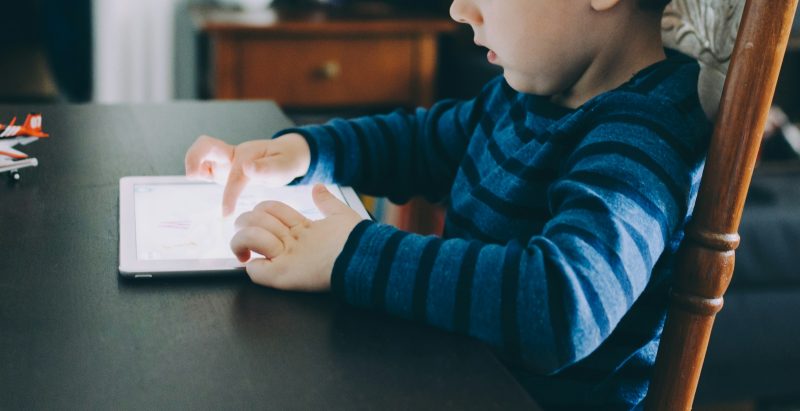
Picture a Sunday afternoon, just before five. “One more episode,” says your daughter without looking up from the tablet. It is the third “last episode”.
You take the device out of her hands, she cries, the bedroom door slams. And you wonder how a relaxed Sunday turned into a power struggle so quickly.
The short version
- The German medical guideline on the subject recommends: no screen media under 3; at 3 to 6, no more than 30 minutes on some days; at 6 to 9, no more than 30 to 45 minutes on some days; and at 9 to 12, no more than 45 to 60 minutes a day in free time.
- Rules about how long should be agreed between parents and children, in writing – in a media use agreement, for instance.
- Fixed time slots, a visible clock and a warning before the end make switching off easier.
- Screens are best off at meals and for about an hour before sleep.
- The guideline advises against using screen media as a reward, a punishment or a way of calming a child.
How much screen time is alright for children?
Screen time means time in front of a television, tablet, smartphone, computer or games console. Guidance comes from the German medical guideline on preventing dysregulated screen media use, led by the German Society for Paediatrics and Adolescent Medicine and produced with the Federal Centre for Health Education among others. It is currently valid until 2028.
| Age | The guideline's recommendation |
|---|---|
| under 3 | no screen media |
| 3 to 6 | no more than 30 minutes on some days, not without a parent |
| 6 to 9 | no more than 30 to 45 minutes on some days, in free time |
| 9 to 12 | no more than 45 to 60 minutes a day, in free time |
The German Federal Institute for Public Health (BIÖG) gives very similar figures. One thing matters: these are upper limits, not a daily ration that has to be used up. “On some days” also means there does not have to be screen time every day.
How do you agree rules children go along with?
Together and in writing. That is exactly what the guideline recommends: set the rules about how long down together in writing, and carry them out together. A rule your child helped write is, after all, partly their rule.
Fixed time slots. The parents' guide SCHAU HIN! suggests fixed sequences – after homework only, and only until dinner. Knowing when the next time will be means not having to ask again every day.
Make the end visible. SCHAU HIN! names classics such as an egg timer beside the screen. Announce the end a few minutes beforehand and look for a good stopping point together, such as the end of the episode.
Screen-free times. The BIÖG recommends that all screens take a break at meals and are switched off about an hour before sleep. That goes for the grown-ups' phones at the table too.
A weekly budget for older children. Older children can spread a fixed amount of time across the week, or there are “vouchers” for media use they can spend freely. The BIÖG names both as options.
Example and technology. The guideline reminds parents of their own role as an example. It also recommends knowing and using technical access controls – which do not, however, replace the conversation about rules.
A rule agreed before switching on does not have to be negotiated when switching off.
What helps when switching off goes wrong?
Even with good agreements there will be days when the end costs tears. That does not mean the rules are no good.
- Allow the feelings, keep the rule. “I can see you'd have liked to get further. The time is up all the same.” Disappointment is no reason to soften the agreement, and no reason for a punishment either.
- Offer a transition. The switch is easier when what comes next is already clear: a snack, a go with the ball, an audio story while tidying up.
- Adjust later. If it goes wrong at the same point every time, talk about it calmly after a week or two. Rules are allowed to grow.

Should screen time be a reward?
The guideline advises against using screen media as a reward, a punishment or a way of calming a child. Clear rules and age-appropriate upper limits, by contrast, it recommends explicitly. In everyday life that means keeping two things apart:
- Basic time: the agreed time per day comes with no strings. It is not wages, and it is not cancelled as a punishment.
- Extra time: if you do want to work with stars on top, set the frame beforehand – with an upper limit that fits the age recommendation, and a fixed exchange rate rather than spontaneous concessions.
That way your child knows where they stand, and the end does not have to be renegotiated every day. Whether extra time for stars suits your family is your decision. How rewards motivate without doing harm is set out in reward charts for children.
How Fleißstern can make the end easier
With “stars for screen time”, a Premium feature, you decide which apps on your child's iPhone, iPad or Android phone cost stars – games or videos, for instance. How many minutes a star is worth, how much time there is each day without stars, and how much there is at most, is up to you. So you can enter the agreed basic time as time without stars, and set the upper limit by the age recommendation.
Time is only counted while one of those apps is really running. When the time is up, Fleißstern blocks the chosen apps again, and the end does not have to be renegotiated every time.
Common questions
How much screen time a day is alright for a primary-school child?
The German guideline on preventing dysregulated screen media use recommends no more than 30 to 45 minutes on some days, in free time, for children aged 6 to 9. For children aged 9 to 12 it names no more than 45 to 60 minutes a day. Time for school and homework is not included.
At what age can children use a tablet?
The guideline advises keeping children under three away from screen media altogether. Between three and six it should be no more than 30 minutes on some days, and only with a parent present. Children under nine should not have a games console of their own, according to the guideline.
How can I limit my child's screen time?
A combination of agreed rules and technical settings helps. On iPhone and iPad there is Screen Time with Family Sharing; on Android devices there is Google Family Link. The medical guideline explicitly recommends that parents know and use such access controls.
What is a media use agreement?
A media use agreement is a written arrangement between parents and child about screen times and rules. At mediennutzungsvertrag.de, klicksafe and the Internet-ABC association offer an online tool with which families can pick, adapt and print out pre-written rules.
Sources
- S2k guideline on preventing dysregulated screen media use in childhood and adolescence (AWMF register 027-075), valid until 14/07/2028 – AWMF, led by the German Society for Paediatrics and Adolescent Medicine (DGKJ)
- Die wichtigsten Empfehlungen auf einen Blick – medienleitlinie.de (online version of the guideline)
- Empfehlungen (including no. 8, 10, 13 and 30) – medienleitlinie.de
- Tabelle: Wie oft und wie lange dürfen Kinder Medien nutzen? – kindergesundheit-info.de, German Federal Institute for Public Health (BIÖG)
- Medienzeiten: Feste Bildschirmzeiten für Kinder vereinbaren – SCHAU HIN! Was Dein Kind mit Medien macht
- Mediennutzungsvertrag – klicksafe and Internet-ABC e. V.
- Set up parental controls with Family Sharing on iPhone – Apple Support
- Manage screen time on your child's device – Google For Families Help (Family Link)