Tidying a child's room: how it works without a permanent row
Building blocks underfoot, and nothing happens when you say “please tidy up”. Why a whole room overwhelms a child, and how order comes step by step.

Picture opening the door to your child's room and standing on a building block straight away. On the floor there are cars, jigsaw pieces and two jumpers; twelve soft toys are sitting in the bed. “Please tidy your room,” you say, and your son nods.
Half an hour later he is sitting in the middle of the chaos building a garage. Nothing is tidied — and none of it was meant badly.
The short version
- Tidying a whole room overwhelms younger children, says the Bavarian parenting guide; they need help and clear, small instructions.
- Putting toys away is already manageable at two or three; with older children, responsibility grows step by step.
- Fixed places for everything help, and tidying a little every day is easier than everything in one go.
- Fewer toys at once can help: in one experiment, toddlers with four toys rather than sixteen played with a single toy for longer and in more varied ways.
- How tidy older children keep their own room is ultimately their business, says the guide — though a certain level of hygiene has to be there.
Why do children not tidy up?
Untidy children's rooms can drive parents to despair, writes the Bavarian parenting guide (BAER). Many children, by contrast, do not seem bothered by the mess at all. Some only have good ideas once they have gathered everything around them — when soft toys and figures all live together in a cardboard house, for instance. If a game like that runs over several days, the guide advises not interrupting.
It is different when the things are not being played with any more. With older children it is then often about more than tidiness: they want to decide about their own space. If parents simply start tidying themselves in such a situation, a power struggle is quickly under way, says the BAER.
What can children tidy at which age?
How much a child can tidy alone depends on their age, says the BAER. Younger children still need help. The American Academy of Child and Adolescent Psychiatry (AACAP) names putting toys away as a job for two- to three-year-olds. With older children, responsibility can be built up step by step until they keep order independently.
What matters, says the BAER, is that your child knows exactly what goes where. One big instruction then becomes several small ones:
| Instead of | Better |
|---|---|
| “Please tidy your room.” | “All the cars are driving into the garage now.” |
| “Sort this out.” | “I'll take the blocks, you take the soft toys.” |
| “Why is everything lying around here?” | “The books go on the shelf. Which one will you put in first?” |
The first two examples come from the BAER. The “garage” can simply be a large box.
How do children learn to tidy?
Start together. It helps to pay attention to order together from an early age, says the BAER. Younger children can sort and put toys away with you at a “tidying party”.
Everything has its place. Clothes go in the wardrobe, books on the shelf: that rule is among the guide's suggestions too.
A little every day. It is easier to tidy something every day than everything in one day, says the BAER.
Set the rules together. Setting rules together wherever possible and reminding everyone of them regularly can make tidying a firm routine, according to the guide.
Set an example. In shared rooms such as the living room, things are put away after playing or working — and that goes for parents too. Children learn by watching that tidying is part of it, says the BAER.
Throw nothing away unasked. That is also among the guide's suggestions.
Not the whole room, but all the cars to begin with: small instructions are something children can manage.
Do fewer toys help with tidying?
An experiment by a US research team supports offering fewer toys at a time. Thirty-six toddlers played once with four toys and once with sixteen. With less choice they spent longer on a single toy and played with it in more varied ways (Dauch et al., 2018). The study was not about tidying, but fewer things also means less to put back.
The AOK's ADHD parent training also names fewer toys as a possible answer where a child's room is always chaotic. The BAER suggests sorting out things that are no longer needed on a regular basis and donating them, for example. Anyone who would rather not sort things out can pack some of the toys away for a while.
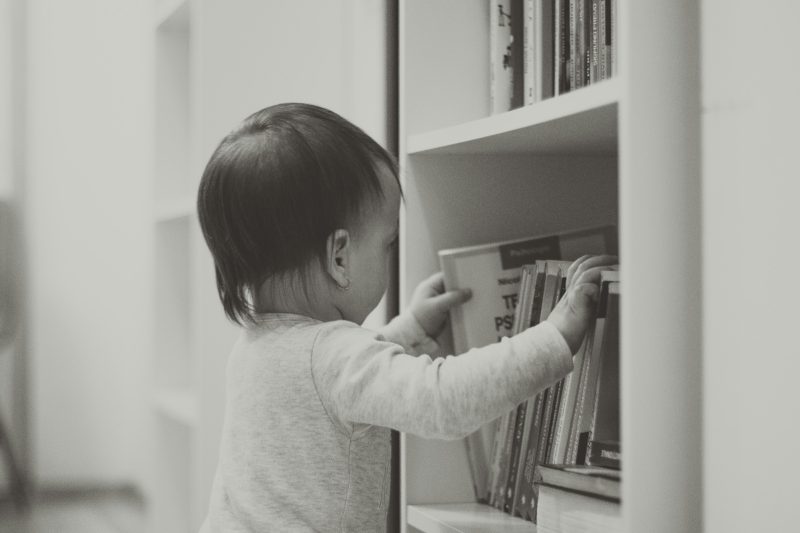
What if your child still does not tidy?
There is a legal basis too: under section 1619 of the German Civil Code, children living in the parental home are obliged to help in the household as far as their strength allows. With older children, though, how tidy their own room looks is ultimately their business, says the BAER. A certain level of hygiene still has to be there: empty yoghurt pots, dirty plates and soiled clothes get cleared away.
For rules that are meant to hold, the AOK's ADHD parent training recommends concentrating on one problem and setting at most three clear rules for it. They should be chosen so that a child can already keep to them at least half the time. What helps when agreements still do not work is covered in when children do not listen, and which jobs suit which age in chores for children by age.
How Fleißstern helps with tidying
In Fleißstern you set “tidy your room” up once as a task — every evening, for instance — or in small steps such as “books on the shelf” and “laundry in the basket”. Your child ticks it off themselves in the children's view and sees how many stars have come in. For important tasks the stars only come after your confirmation.
With Premium your child can show by photo that the room really is tidy, and shared rooms such as a playroom can be shared out among siblings in turn. Stars can only be deducted if you switch that on for a task explicitly.
Common questions
At what age can children tidy their own room?
Joining in with tidying is possible at two or three, for instance by putting toys in a box. A whole room, though, overwhelms younger children, says the Bavarian parenting guide. With older children, responsibility can be built up step by step until they keep order independently.
What can I do if my child will not tidy up?
Small, clear instructions rather than “tidy your room” help, as do fixed places for everything and tidying together, especially with younger children. The Bavarian parenting guide advises setting rules together wherever possible and reminding everyone of them regularly. With older children, how tidy the room is, is ultimately their business — but a certain level of hygiene has to be there.
How often should a child's room be tidied?
There is no fixed rule. According to the Bavarian parenting guide, though, it is easier to tidy something every day than everything in one day. A short fixed moment, before dinner for example, can help make a habit of it.
Are too many toys bad for children?
That cannot be said across the board. In one experiment, toddlers with four toys played with a single toy for longer and in more varied ways than with sixteen. The Bavarian parenting guide suggests sorting out things that are no longer needed on a regular basis and donating them, for example.
Sources
- Aufräumen – Bayerischer Erziehungsratgeber (BAER), Bavarian State Ministry for Family, Labour and Social Affairs
- Dauch et al. (2018): The influence of the number of toys in the environment on toddlers' play. Infant Behavior and Development 50 – PubMed
- Chores and Children, Facts for Families No. 125 – American Academy of Child and Adolescent Psychiatry (AACAP)
- Situation anpassen (ADHS-Elterntrainer) – AOK-Bundesverband
- Wenige und klare Regeln (ADHS-Elterntrainer) – AOK-Bundesverband
- Section 1619 of the German Civil Code (BGB) – services in the home and the family business – Federal Ministry of Justice, gesetze-im-internet.de