An evening routine with children: calm bedtimes instead of a struggle
One more glass of water, one more trip to the loo, one more question: how a fixed evening routine makes bedtime calmer – and what helps when it still sticks.
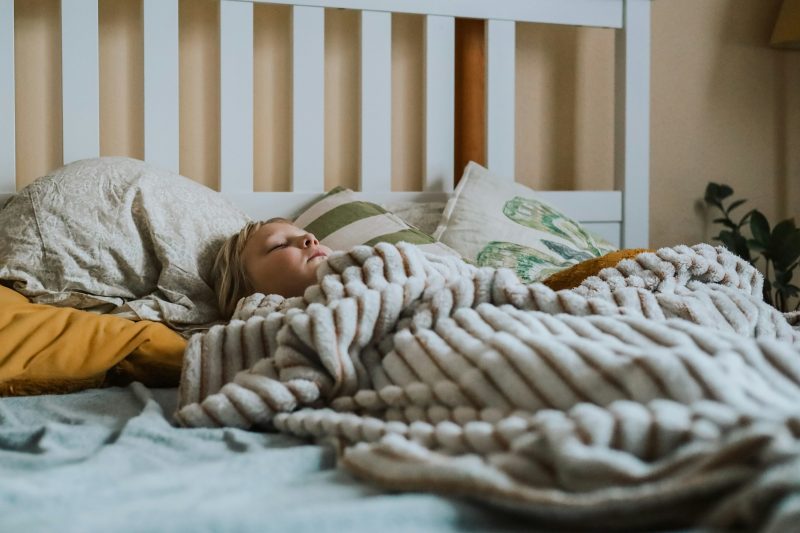
Picture it: 7:40 in the evening. Teeth brushed, light off, and from the bedroom comes: “I'm thirsty.” Five minutes later your son needs the loo, then the rabbit is missing, then there is something he absolutely has to tell you.
By half past eight you finally sit down, and the evening you were looking forward to is nearly over. You were both tired at seven.
The short version
- A bedtime ritual that runs much the same every evening gives children a sense of security, says the German Federal Institute for Public Health (BIÖG).
- In a large survey of over 10,000 children up to five, those with a regular evening routine went to bed earlier, fell asleep faster and slept longer.
- The right bedtime is the wake-up time minus the child's sleep needs; for children aged 6 to 12, US sleep specialists recommend 9 to 12 hours.
- In the last hour before bed, rough play and screens should take a break.
- If a child keeps getting up, an agreed “bedtime pass” can help.
Why does a fixed evening routine help?
An evening routine is a fixed sequence of steps before sleep: brushing teeth, pyjamas, a story, lights out. The BIÖG advises keeping the bedtime ritual in much the same form every evening, because that gives children security.
An international survey of 10,085 children up to five supports this: children with a regular evening routine went to bed earlier, fell asleep faster, woke less often and slept longer. The more regular the routine, the clearer the association (Mindell et al., 2015). The data came from the mothers, though, and the study was funded by a consumer goods company.
How much sleep does a child need?
The figures in the table are averages or ranges. The BIÖG stresses that sleep needs differ from child to child.
| Age | Sleep per 24 hours | Source |
|---|---|---|
| 3 years | about 12.5 hours | BIÖG, average |
| 4 years | about 11.8 hours | BIÖG, average |
| 5 years | about 11.4 hours | BIÖG, average |
| 6 years | about 11 hours | BIÖG, average |
| 6 to 12 years | 9 to 12 hours | AASM, recommendation |
The AASM (American Academy of Sleep Medicine) is the US professional body for sleep medicine. Its recommendations are based on an expert consensus (Paruthi et al., 2016).
When should children go to bed?
The BIÖG does the sum like this: wake-up time minus the child's own sleep needs gives the bedtime. A child should be in bed by these times at the latest:
| Sleep needs | Waking at 6:30 | Waking at 7:00 |
|---|---|---|
| 11 hours | 7:30 pm | 8:00 pm |
| 10 hours | 8:30 pm | 9:00 pm |
| 9 hours | 9:30 pm | 10:00 pm |
To avoid a nightly power struggle, the BIÖG advises sticking consistently to a bedtime once it has been agreed. What can be prepared in the evening for the next morning is set out in a morning routine with children.
What an evening routine can look like
For a six-year-old who gets up at 6:45 and needs about eleven hours of sleep, the evening might go like this:
| Time | Step |
|---|---|
| 6:15 pm | Dinner |
| 6:45 pm | Screens off, school bag packed, clothes laid out for tomorrow |
| 7:00 pm | Quiet play, a puzzle or drawing |
| 7:15 pm | Wash, brush teeth, pyjamas |
| 7:25 pm | A story and talking about the day |
| 7:45 pm | Lights out |
The gaps follow the BIÖG's advice: a good hour between dinner and bed, no rough play and no screens in the last hour, and time in the last half hour for a ritual with singing, reading or music. The German medical guideline on screen use also advises no screens in the last hour before sleep.
What if your child will not go to bed?
- Spot the tiredness. Yawning, rubbing eyes or being wired are typical signs of tiredness, says the BIÖG.
- Enough happening in the day. The BIÖG advises plenty of movement and fresh air during the day, and mental stimulation too.
- Keep an eye on the nap. If your child still naps, they should ideally be awake for at least four hours in a row before bedtime, says the BIÖG.
- Ask little in the evening. If a child is overstimulated in the evening, the AOK's ADHD parent training advises not making big demands late in the day.
- Talk about worries during the day. Children should be able to come with worries and fears at any time, says the BIÖG, but heavy conversations belong in the daytime.
What helps when a child keeps getting up?
One approach from research is the bedtime pass. In the evening the child gets a card they can cash in once, for a glass of water or a last hug. After that, parents do not respond to further calls.
In a small study with 19 children aged three to six, children with a pass left their room less often and called out less, still three months later (Moore et al., 2007). Whether that suits your family is your decision. If the difficulties persist, the BIÖG advises seeking paediatric advice, and explicitly warns against giving a child sleep medication on your own initiative.
It is not the clock that gets a child into bed, but an evening that ends the same way every day.
How Fleißstern helps with the evening
In Fleißstern, tasks are sorted into morning, afternoon and evening. You set the steps of the evening routine up once – brushing teeth, packing the school bag – and the app brings them back on the right days. The most common tasks are already there as templates.
If you like, a task can have a fixed time. Then the reminder arrives on the phone, and it is not you asking about pyjamas for the third time. In the children's view your child ticks off themselves and watches the ring fill up with every task done.
Common questions
When should children go to bed?
That depends on the wake-up time and on sleep needs. The German Federal Institute for Public Health does the sum as wake-up time minus the child's own sleep needs. A child who gets up at 7 and needs about ten hours should be in bed by 9 pm at the latest.
How much sleep does an 8-year-old need?
The American Academy of Sleep Medicine recommends 9 to 12 hours of sleep within 24 hours for children aged 6 to 12. Needs differ from child to child. At six, the average is about eleven hours according to the German Federal Institute for Public Health.
What can I do if my child will not go to bed?
A fixed bedtime that parents stick to as a rule helps, as does a bedtime ritual that runs much the same every evening. The German Federal Institute for Public Health also advises avoiding rough play and screens in the last hour before bed, and watching for signs of tiredness such as yawning or rubbing eyes.
How long before sleep should children stop using screens?
About an hour. That is recommended both by the German Federal Institute for Public Health and by the German medical guideline on screen use among children and young people. The guideline also advises that mobile screen devices should not be in the room during sleep.
Sources
- Mindell et al. (2015): Bedtime routines for young children: a dose-dependent association with sleep outcomes. Sleep 38(5) – PubMed
- Paruthi et al. (2016): Recommended Amount of Sleep for Pediatric Populations: A Consensus Statement of the American Academy of Sleep Medicine. Journal of Clinical Sleep Medicine 12(6) – PubMed Central
- Moore et al. (2007): Evaluating the Bedtime Pass Program for child resistance to bedtime – a randomized, controlled trial. Journal of Pediatric Psychology 32(3) – PubMed
- Von Schlafbedarf und Schlafdauer – kindergesundheit-info.de, German Federal Institute for Public Health (BIÖG)
- So fallen Zubettgehen und Einschlafen leichter – kindergesundheit-info.de, German Federal Institute for Public Health (BIÖG)
- Schlafvoraussetzungen für das Kind – kindergesundheit-info.de, German Federal Institute for Public Health (BIÖG)
- Empfehlungen (Nr. 4 and 5) – medienleitlinie.de (online version of the German AWMF guideline 027-075)
- Situation anpassen (ADHS-Elterntrainer) – AOK-Bundesverband